What Happens During Templating and Installation
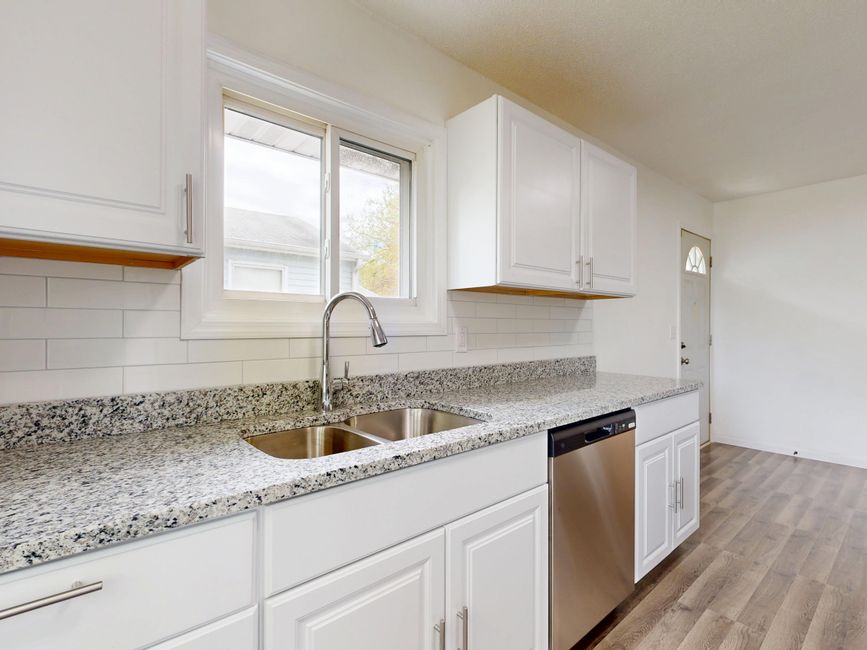
Hold a four foot level against the wall behind the range and note the gap at each end. That gap is why countertops in Wichita, KS are never cut from plan dimensions alone, and the breakdown sitting on countertops wichita faith bible online lists the steps in the order the crew works them. Houses in Old Town and out in Sedgwick County all settle differently, so every kitchen gets measured fresh.
Templating the Room
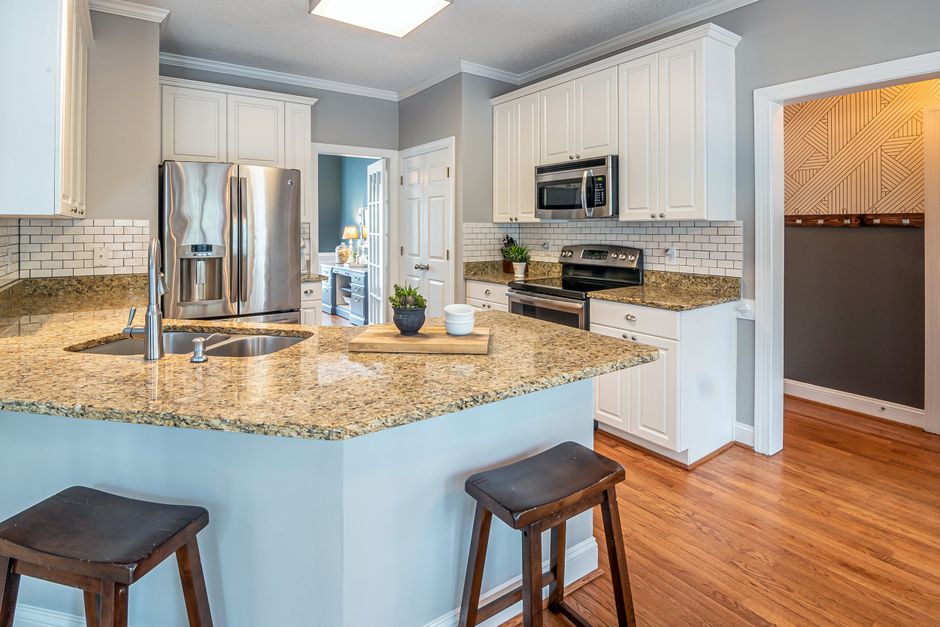
Templating records the exact cabinet layout, the wall irregularities and the appliance positions. The installer works with a digital measuring tool or with rigid template strips fixed together into the shape of the run. Walls are rarely straight or square, so the template captures the real shape instead of the nominal dimensions. A plan will not show a bowed corner or a cabinet run that has drifted out of level.
Laying the Template on the Slab
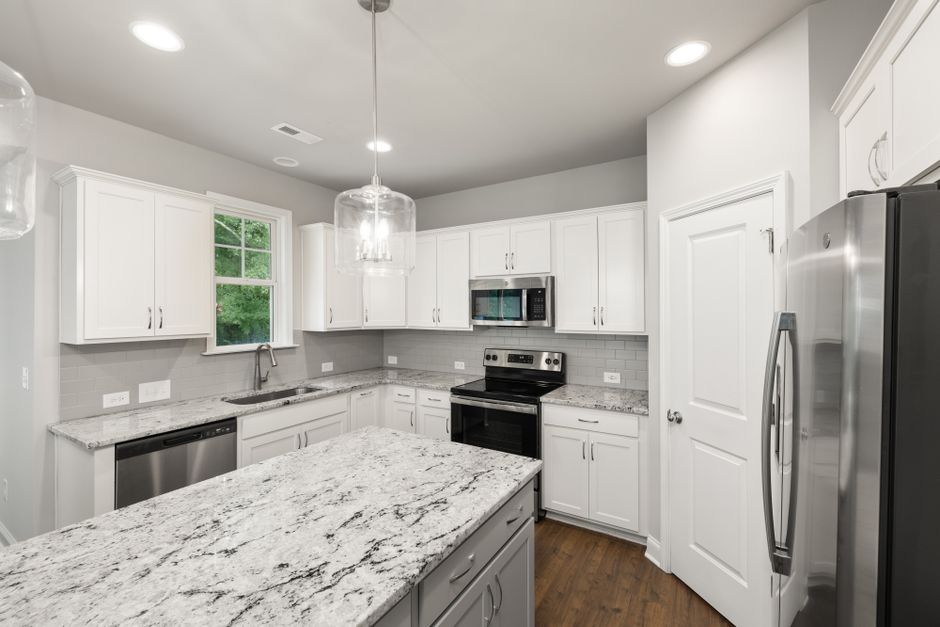
Back at the shop, the fabricator lays the template over the actual slab. Granite, quartz, quartzite and marble all carry movement, and veining or pattern has to match across pieces. Seam placement gets planned at this stage, not at the install. A remnant can cover a vanity or a small island, but it goes through the same layout check as a full slab.
Cutting the Edge and the Openings
Sink, cooktop and faucet openings are cut from the template position. The edge profile is shaped after that. An eased edge keeps a clean, square look, and a bullnose rounds it fully. Both are polished by hand along the cut faces so the front reads as one continuous line.
Setting the Seams
Seams are joined with color matched epoxy or polyester adhesive. The seam setter uses suction cups to pull the two pieces flush and tight, then checks the surface with a straightedge before the adhesive grabs. A well set seam can be tight and quiet under the hand, but nobody should promise it disappears. Veined stone and dark stone behave differently here.
Sinks, Overhangs and Cure Time
An undermount sink is attached to the underside of the stone with clips or brackets and sealed with silicone, either before the top is set or immediately after. A seating overhang needs support, such as steel brackets or corbels, because stone can crack under load without it. Silicone at the sink and backsplash joints needs about a day to fully cure, so heavy sink use is often delayed. Faucets and plumbing are reconnected once the tops are set and the adhesives have had time to grab.