Which Countertop Material Handles Hard Water Best
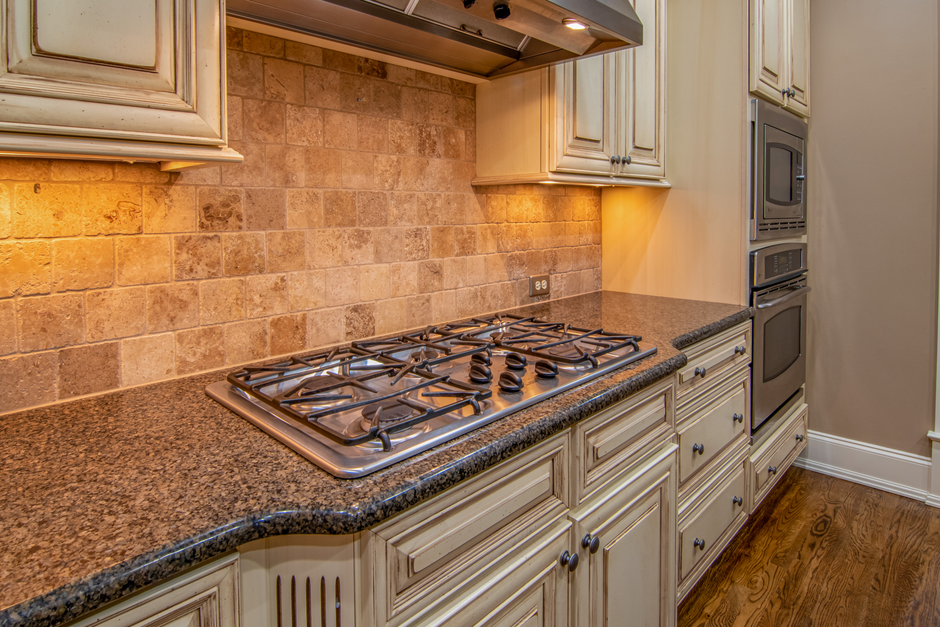
Hard water does one thing to a countertop: as the water evaporates around a faucet, it leaves behind the calcium and magnesium it was carrying, and that film hardens into white crust. Kitchen work across Wichita, KS, keeps showing the same pattern, and the notes kept at countertops wichita faith bible online treat the crust as a materials question first and a cleaning question second. Every countertop surface reacts differently to the fix.
What the white crust is
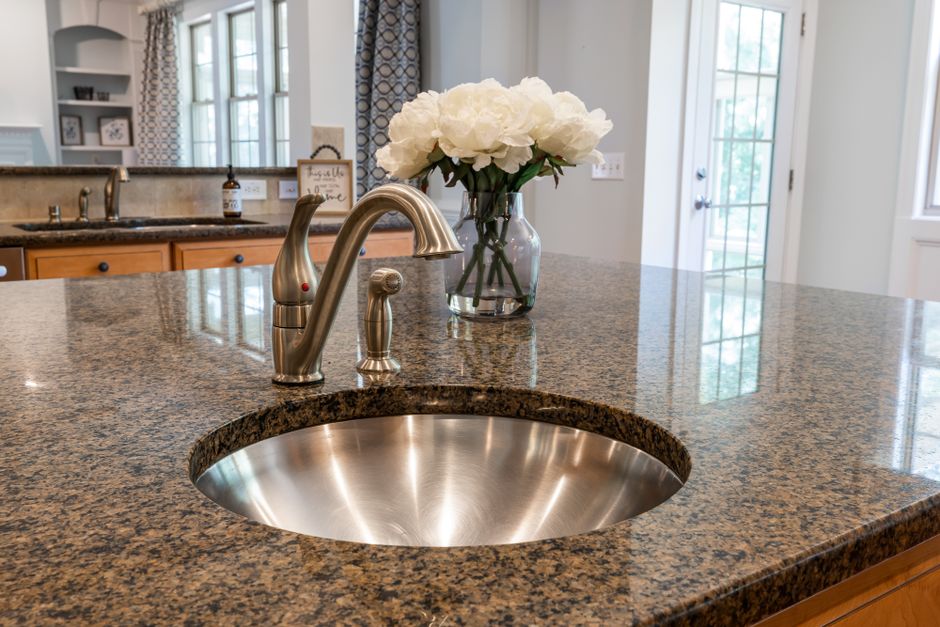
The crust is mineral residue, mostly calcium and magnesium deposits. It builds along the faucet base, around the sink edge and anywhere a drip sits long enough to dry. Drying the area around the faucet after use prevents most of it on any surface, and that costs a towel and ten seconds.
Marble and limestone
Marble and limestone are made largely of calcium carbonate. Vinegar and acid based scale removers dissolve a thin layer of the stone itself, which leaves a dull etched patch where the crust used to be. Vinegar is not safe for all stone, and these two are the clearest case. A pH neutral stone cleaner and a soft cloth are the right start, and a dull spot already etched needs a pro to re-hone the slab.
Granite and quartzite
Granite is mostly silicate minerals and handles mild acids far better than marble. Some granite is porous enough to need periodic sealing. Sealing slows absorption but does not make the stone stain proof, so spills still get wiped promptly. Quartzite, being dense, usually behaves similarly, though each slab varies and a sample is worth testing in a hidden spot.
Engineered quartz
Engineered quartz is crushed quartz bound with resin. It is nonporous and does not need sealing, so mineral spots wipe off without much fuss. The resin is the weak point. Strong solvents and high heat can discolor it, so a harsh chemical scale remover should be checked against the maker's care guidance before it touches the surface. Quartz is not heat proof, and a hot pan still goes on a trivet.
Laminate and finish
Laminate has a particleboard or fiberboard core that swells when water reaches it. The paths in are seams and unsealed sink cutouts, so a crust ring at the sink edge deserves a look at the caulk and the cutout before anything else. Finish matters too. A honed or matte surface shows water spotting and mineral film differently than a polished one, and spots read more clearly on dark polished stone. At templating, a fabricator can point out where the sink and faucet will sit, which helps judge how much splash and standing water that area will see.